
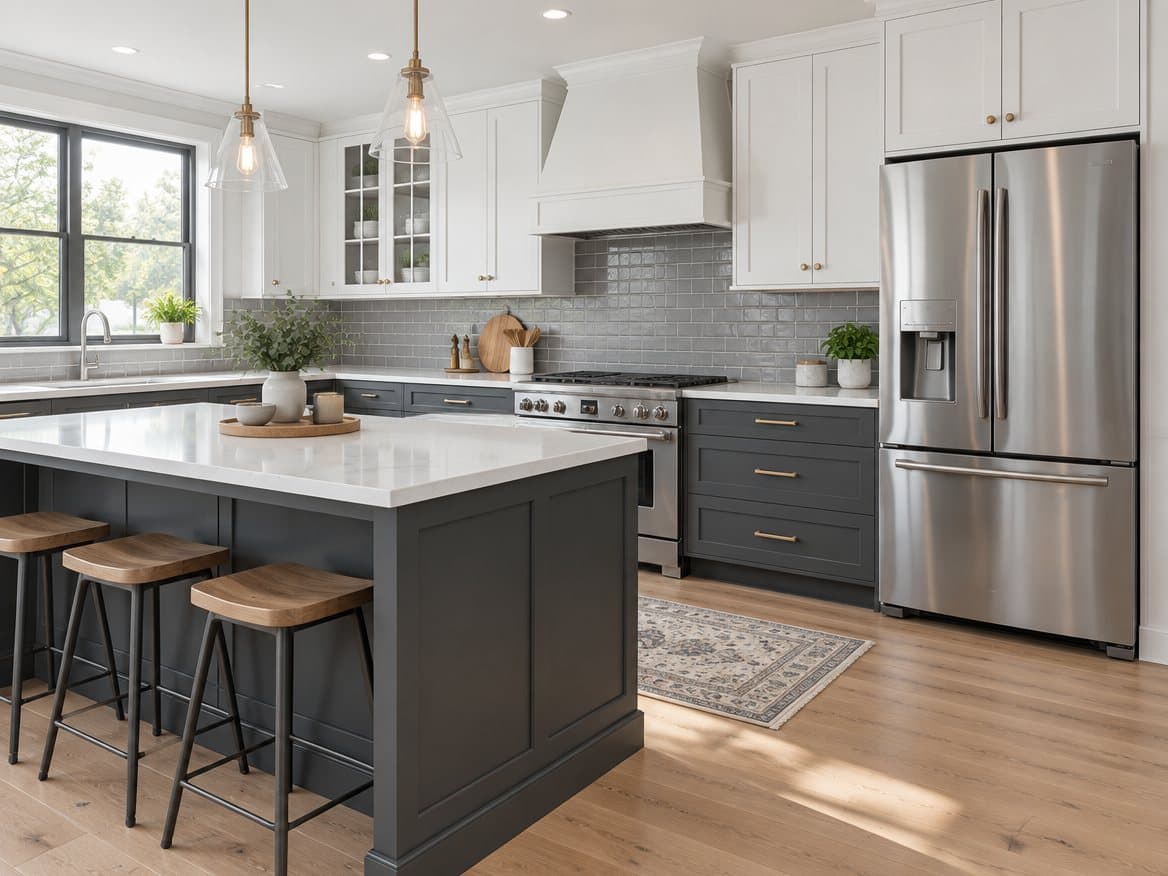
Cabinets cover more of your kitchen than anything else, so their color and finish set the look of the whole room. They also take more wear than almost any surface in the house. Here is how to choose a cabinet color and finish you will still like, and that will still look good, years from now.
Painted cabinets
Painted cabinets give you a clean, solid color in any shade: white, cream, greige, sage, navy or black.
- Pros: Any color you want, a smooth modern look, and easy to coordinate with countertops and tile.
- Cons: Painted finishes show chips on edges and corners more than stain, and on solid-wood doors you may see hairline cracks at the joints as the wood moves with the seasons. Richmond's humid summers and dry winters make that movement more noticeable.
- Tip: Painted MDF door panels resist joint cracks better than solid wood. Ask about a factory-applied, cured finish rather than paint applied on site.
Stained cabinets
Stain lets the wood grain show through. White oak, walnut, cherry and maple each have a different look.
- Pros: Stain hides small dings, ages well and adds warmth.
- Cons: Fewer color options, and wood tones can look dated if the stain color is very trendy.
- Tip: Natural and light-to-medium stains on white oak or walnut are popular now and pair well with warm neutrals.
Two-tone kitchens
Two-tone means using different finishes on different parts of the kitchen, such as dark lowers and light uppers, or a contrasting island.
- Island in a contrasting color. The easiest way to add color without committing the whole kitchen to it. See our kitchen island ideas.
- Dark lowers, light uppers. Grounds the room and keeps it bright at eye level.
- Wood plus paint. A stained island or open shelves with painted perimeter cabinets.
- Keep it to two finishes, plus wood shelves at most, so the kitchen does not look pieced together.
Popular color directions right now
- Warm whites and creams instead of stark bright white.
- Greige and mushroom tones that bridge warm and cool finishes.
- Muted greens and blues, especially on islands and in older Richmond homes with traditional trim.
- Natural wood, especially white oak, often alongside painted cabinets.
Sheen matters as much as color
- Matte and flat: Modern and hides fingerprints in some colors, but can be harder to wipe clean.
- Satin: The most common choice. Easy to clean and does not show every flaw.
- Semi-gloss and high gloss: Very easy to wipe, but shows every dent and fingerprint.
How to choose
- Start with what stays. Flooring, the countertop slab and any brick or stone set the undertones.
- Look at samples in your kitchen, in morning and evening light. Colors shift dramatically under different light. See our kitchen lighting guide.
- Pick the countertop and cabinets together. See quartz vs. granite and quartz, quartzite or porcelain.
- Choose hardware last, once the colors are set. See our new cabinet door styles and hardware guide.
- If you plan to sell in a few years, keep the main cabinets neutral and add color on the island. See remodeling before you sell.
Can you change the color without replacing cabinets?
If your cabinet boxes are solid and the layout works, refacing with new doors and drawer fronts changes the color and style for less than full replacement. See cabinet refacing vs. replacement.
Frequently asked questions
Are white kitchen cabinets still in style? Yes, though warmer whites and creams are replacing stark white, often with wood or a colored island.
Do painted cabinets chip? Painted finishes show chips on high-contact edges more than stain. A factory-cured finish holds up best.
What cabinet color is easiest to keep clean? Mid-tone colors and wood stains in a satin sheen hide fingerprints and dust better than very dark or very bright finishes.
See colors in your own kitchen
We bring door samples to your home so you can see them in your own light alongside your floors and countertop options. Schedule a free in-home design consultation, or read about stock, semi-custom and custom cabinets.