
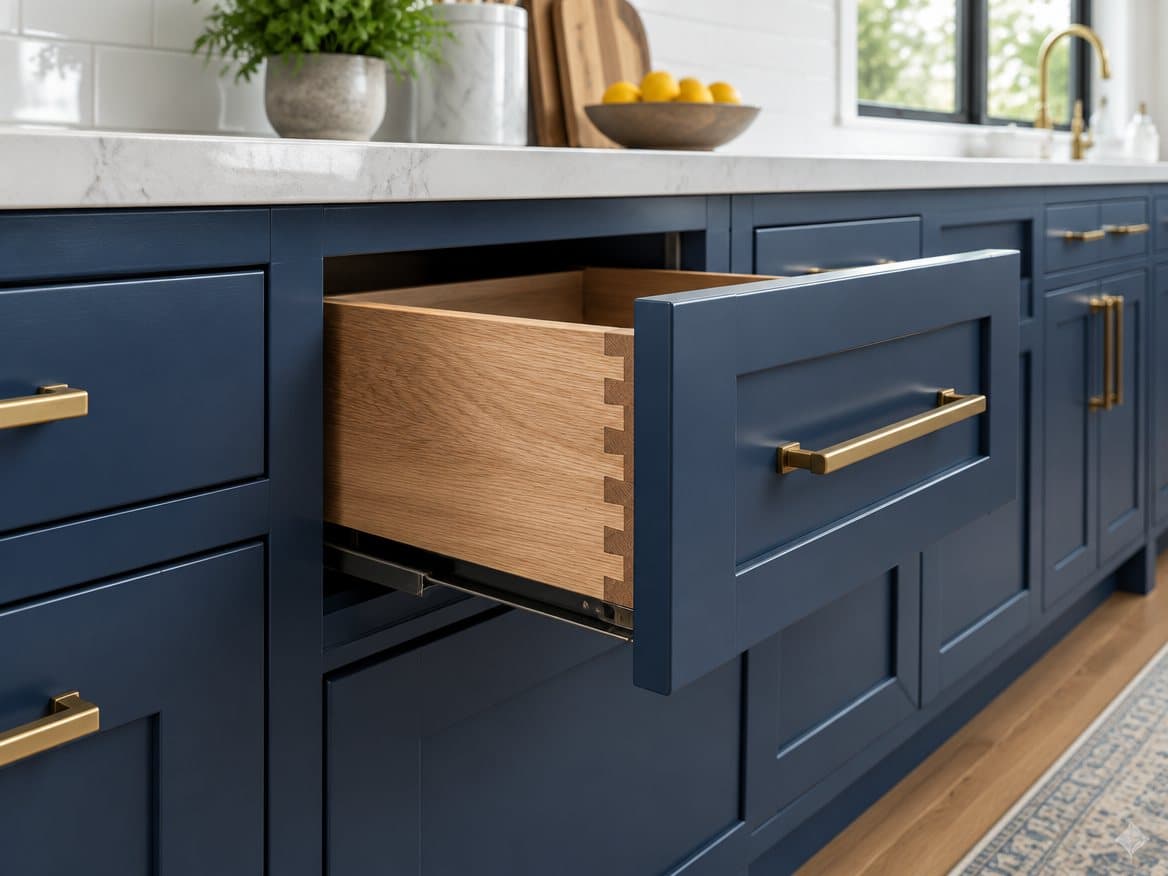
Cabinet door style and hardware are small details that change the whole character of a kitchen or bathroom. The same layout can look farmhouse, traditional or modern depending on the doors and pulls you choose. Here is how the main options compare.
The main cabinet door styles
Shaker
A flat center panel with a simple square frame. Shaker is the most popular door style because it works with almost any look, from traditional to transitional to modern farmhouse. The inside edge collects a little dust, but it is easy to wipe.
Slab (flat panel)
A single flat door with no frame. Slab doors look clean and modern, especially in wood veneer, matte paint or high-gloss finishes. They are the easiest to clean. On their own they can look plain, so texture or wood grain helps.
Raised panel
A center panel that rises above the frame, often with a decorative edge. Raised panels suit traditional homes, including many in Richmond's older neighborhoods, but they have more crevices to clean.
Beadboard, fluted and reeded
Vertical grooves or ribs add texture. They work well on an island, a vanity or a few accent doors rather than a whole kitchen.
Glass-front
Glass doors on a few upper cabinets break up a long run and show off dishes. Use them where you are willing to keep things tidy. See small kitchen ideas.
How the doors sit on the cabinet: overlay vs. inset
- Full overlay: Doors cover nearly the entire cabinet front with small gaps between them. It looks seamless and modern and gives the most interior access. This is the most common choice.
- Partial overlay: Doors cover part of the frame, leaving more of the frame visible. It is common in older and builder-grade kitchens.
- Inset: Doors sit flush inside the frame. It is a classic, furniture-like look that suits historic homes, but it costs more, gives slightly less storage and needs precise installation so doors stay even as the house moves.
See stock, semi-custom and custom cabinets for which options each cabinet level offers.
Hardware: knobs, pulls or both
- Knobs on doors, pulls on drawers is the classic combination.
- Pulls everywhere looks more modern and is easier to grab with full hands.
- Edge pulls, finger pulls and push-to-open suit slab doors and minimal designs.
- Appliance pulls are larger and sturdier for panel-ready refrigerators and dishwashers.
Choosing sizes
- A common guideline is a pull about one-third the width of the drawer.
- Wide drawers (30 inches and up) often look best with two pulls or one long pull.
- Use one size across most of the kitchen, and use a larger size on wide drawers and tall pantry doors.
Placement
- Upper doors: near the bottom corner on the side opposite the hinge.
- Base doors: near the top corner on the side opposite the hinge.
- Drawers: centered, or centered in the top third of deep drawers.
- Mock up placement with painter's tape before drilling.
Finish
Matte black, brushed brass and nickel are the most common choices. Hardware does not have to match the faucet exactly, but it should feel planned. See our new plumbing fixture finishes guide.
Don't forget what's behind the doors
- Soft-close hinges and drawer glides prevent slamming and wear.
- Full-extension drawers let you reach the back.
- Roll-outs, dividers and pull-outs make deep base cabinets usable. See pantry and storage ideas.
Frequently asked questions
What is the most timeless cabinet door style? Shaker. It has stayed popular for decades because it suits so many design styles.
Are inset cabinets worth the extra cost? In a historic home or a furniture-style kitchen, inset gives a look nothing else matches. In a busy family kitchen, full overlay is easier to live with and gives more storage.
Should cabinet hardware match the faucet? It does not have to match, but the metals should look intentional together.
See door styles in person
We bring door and hardware samples to your home so you can see them next to your floors and countertop choices. Schedule a free in-home design consultation, and see our cabinet colors and finishes guide to finish the picture.