
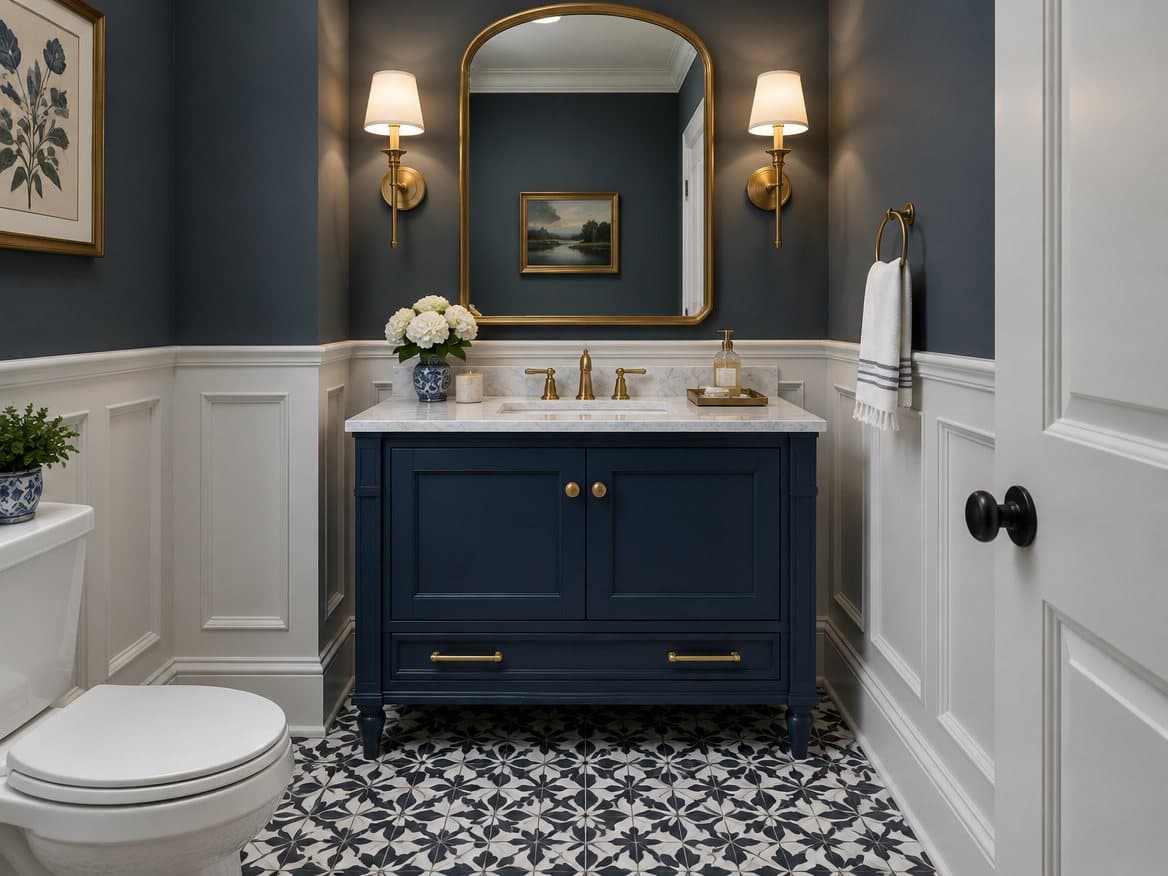
The finish on your faucets, shower trim and cabinet hardware ties the whole room together. It also affects how much cleaning you will do, because some finishes hide water spots and fingerprints and others show every one. Here is how the common finishes compare.
Polished chrome
- Look: Bright, reflective and classic.
- Wear: Very durable and easy to match across brands and replacement parts.
- Cleaning: Shows water spots and fingerprints, but wipes clean easily.
- Best for: Traditional, modern and budget-friendly remodels, and anyone who wants an easy-to-match finish.
Brushed (satin) nickel
- Look: Soft, warm-gray metal.
- Wear: Durable and forgiving.
- Cleaning: Hides water spots and fingerprints well, which makes it a practical choice for busy family bathrooms.
- Best for: Transitional homes and anyone who wants low maintenance.
Stainless steel
- Look: Similar to brushed nickel, slightly cooler.
- Wear: Durable, and matches stainless sinks and appliances.
- Best for: Kitchens. See our new kitchen faucet guide.
Matte black
- Look: Bold, modern contrast, especially against white tile and light cabinets.
- Wear: Quality matters. Cheaper finishes can scratch or fade.
- Cleaning: Hard water can leave visible white spots, so it needs regular wiping.
- Best for: Modern, industrial and modern farmhouse designs.
Brushed and satin brass (gold)
- Look: Warm and elegant. It pairs well with navy, green, white and wood tones.
- Wear: Most modern brass finishes are sealed or coated and hold their color. Unlacquered brass is different: it is meant to darken and develop a patina over time.
- Cleaning: Satin brass hides spots better than polished brass.
- Best for: Traditional, transitional and classic homes, including many older Richmond homes.
Oil-rubbed bronze
- Look: Dark brown with copper undertones.
- Best for: Traditional and rustic designs. It is less common in new remodels today, but it suits some historic homes.
What makes a finish last
Ask how the finish is applied. PVD (physical vapor deposition) finishes bond the color to the metal and resist scratches and tarnish far better than standard plated or painted finishes. Many manufacturers offer PVD on their most popular colors. Also check the warranty on the finish, not just the faucet's internal parts.
Mixing metals the right way
You do not have to match everything. Mixing finishes can look intentional and layered if you follow a few guidelines:
- Pick one dominant finish for the faucets and shower trim.
- Add one accent finish for cabinet hardware, lighting or a mirror frame.
- Keep finishes consistent within each zone. The shower valve, shower head and tub filler should all match each other.
- Limit it to two, or at most three, finishes in one room.
- Repeat the accent at least twice so it looks planned.
See our new cabinet door styles and hardware guide and bathroom lighting and mirror guide.
Order everything together
Finishes vary from brand to brand, and even between product lines, so "brushed brass" from two companies may not match. Choose your faucet, shower trim and accessories from the same line when possible, and see samples side by side. Also choose your shower valve and trim together, because the hidden valve body and the visible trim must be compatible. See our shower fixtures guide.
Frequently asked questions
What faucet finish is easiest to keep clean? Brushed nickel and stainless hide water spots and fingerprints better than polished chrome, matte black or polished brass.
Is matte black going out of style? It is still popular, especially in modern designs, though warm brass and nickel are increasingly common. Pair black with timeless shapes so it ages well.
Can I mix brass and black? Yes. Use one as the main finish and the other as an accent, and repeat it at least twice in the room.
See finishes in person
We bring finish samples so you can see them next to your cabinets, tile and countertop. Schedule a free in-home design consultation, and see our bathroom design trends for 2027 and kitchen design trends for 2027.