
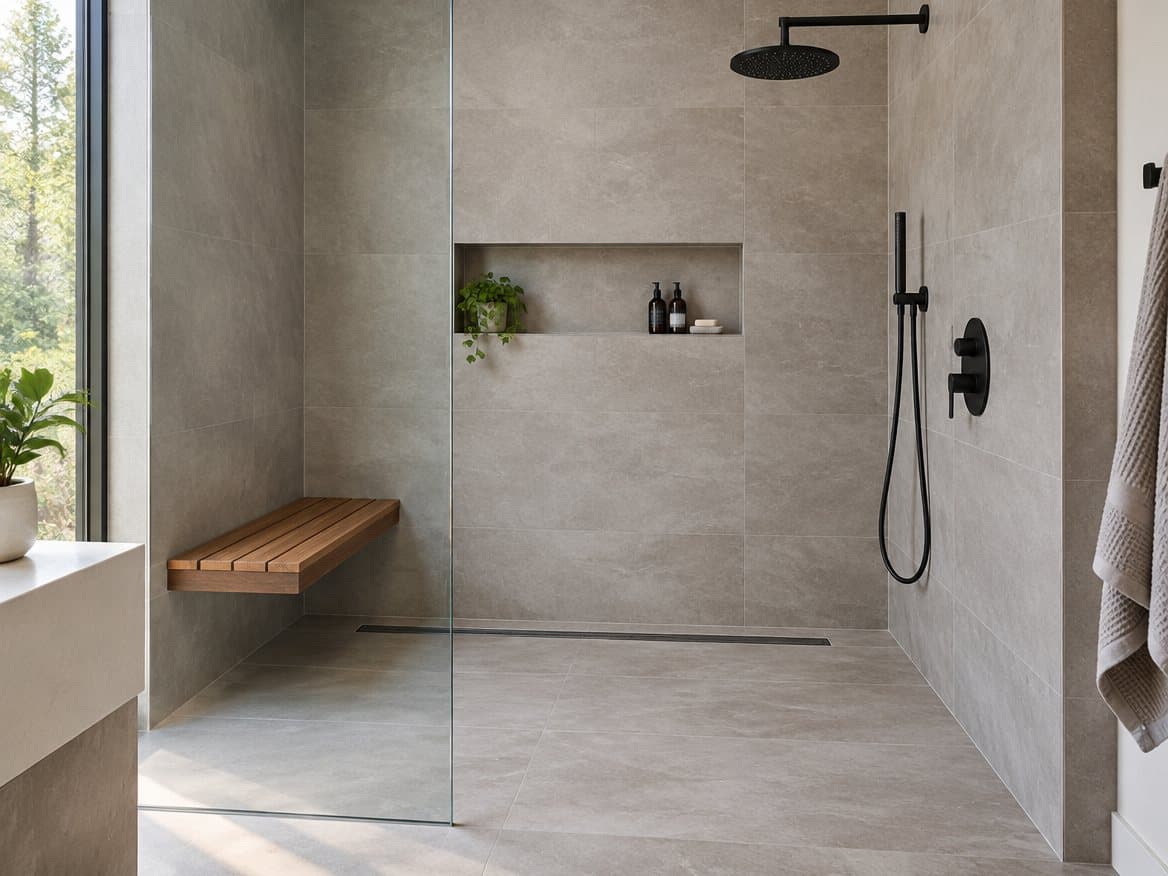
A recessed niche and a built-in bench turn a plain shower into one that is comfortable to use every day. They also have to be built carefully, because every corner and shelf is a place water can collect. Here is how to plan them.
Shower niches
Size it for real bottles
A niche that looks nice in a photo but will not fit a pump bottle is frustrating every day. Measure your tallest bottles before framing. A common approach is a niche about 12 inches tall, or a two-shelf niche for families who share a shower. Wall studs set the natural widths, but a niche can be wider with framing changes.
Placement
- On a wall that does not face the door, so bottles are not the first thing you see.
- Out of the main spray so products do not get soaked.
- Within easy reach while seated if there is a bench, or at a comfortable standing height.
- Not on an exterior wall if possible, because insulation is reduced there and condensation is more likely.
- Line it up with the tile layout. The top and bottom of a niche look best when they align with grout lines.
Design ideas
- A horizontal niche running the width of a wall looks clean and modern.
- An accent tile or stone back turns the niche into a feature.
- A quartz or stone shelf in a two-shelf niche avoids seams.
- An LED strip in the top of the niche adds a soft glow. See our new bathroom lighting guide.
Alternatives
- A ledge or half wall along the back of the shower.
- A corner shelf built in with the tile.
- A recessed niche outside the shower for towels and extra supplies. See our new bathroom storage ideas.
Shower benches
Built-in vs. floating
- Built-in bench: A framed, waterproofed and tiled seat. It is solid and permanent, but it takes floor space.
- Floating bench: A bench mounted to the wall with no base. It is easier to clean under and feels lighter in a smaller shower. It needs proper structural support.
- Fold-down seat: Stays out of the way until you need it. It suits smaller showers and aging-in-place designs.
- Freestanding teak stool: The simplest option when a built-in will not fit.
Getting the details right
- Seat height: Typically close to chair height, around 17 to 19 inches.
- Depth: Deep enough to sit comfortably.
- Slope the top slightly toward the drain so water does not pond.
- Place it where you can reach the handheld and controls while seated. See our shower fixtures guide.
- Add blocking for a grab bar nearby while the walls are open. See our aging-in-place bathroom guide.
Waterproofing is the most important part
Niches and benches add inside corners, flat surfaces and seams, which are the places showers most often leak. Both must be fully waterproofed as part of the shower system, not just tiled. Every niche sill and bench top should slope slightly so water runs off instead of sitting. See why showers leak and bathrooms grow mold and our shower tile and grout guide.
Frequently asked questions
How big should a shower niche be? Big enough for your tallest bottles, usually about 12 inches tall per shelf. Measure before framing.
Can a niche go on any wall? Interior walls are best. Exterior walls and walls with plumbing or ductwork can limit placement.
Is a shower bench worth the space? For shaving, relaxing or aging in place, many people find a bench one of the most useful features in a shower. In a small shower, a fold-down or floating seat saves space.
Design a shower that works for you
We plan niches, benches, glass and fixtures together so your shower is comfortable and built to stay dry behind the tile. Schedule a free in-home design consultation, and see walk-in shower vs. tub and our shower glass guide.