
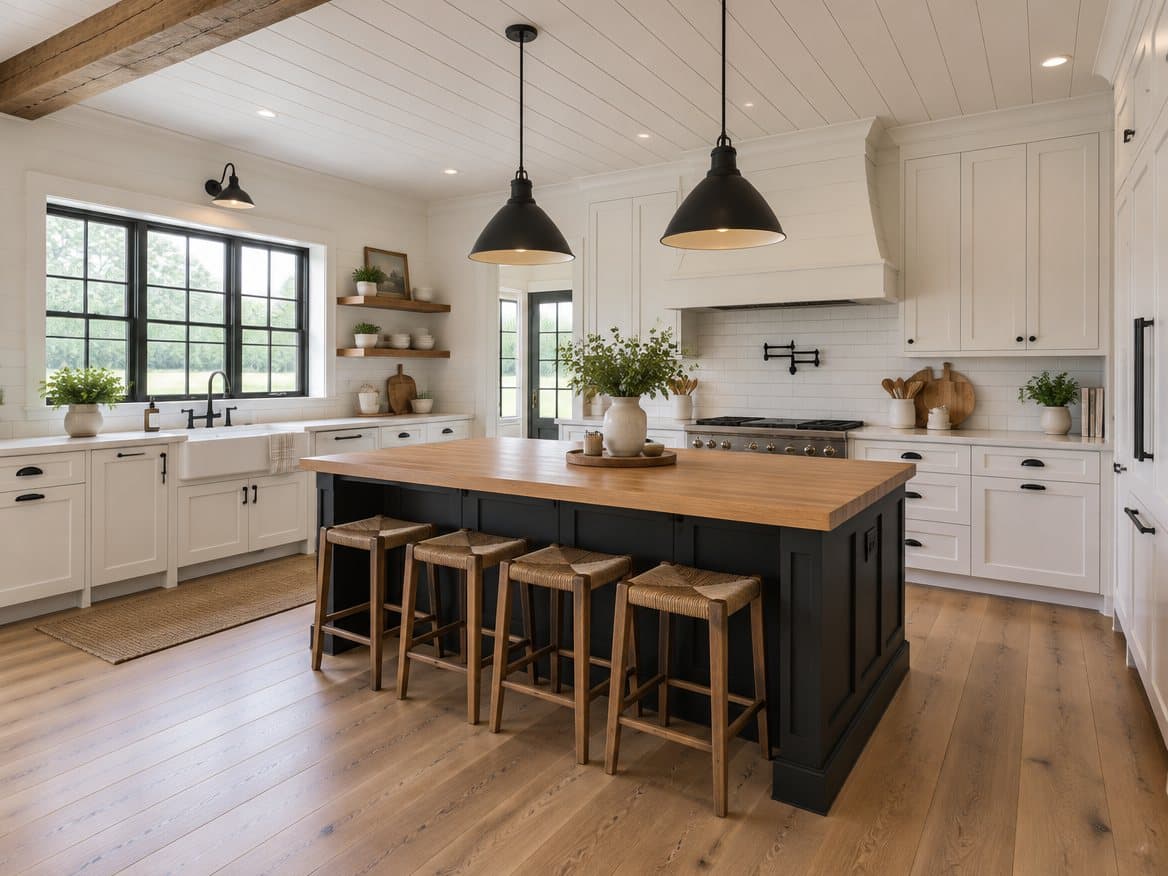
You use the kitchen sink more than any other part of the kitchen, yet it is often the last thing homeowners choose. Because the sink affects the cabinet below it, the countertop cutout and the faucet, it needs to be chosen early. Here is how Kitchen and Bath Experts helps Richmond homeowners pick a sink that will still feel right years from now.
Mounting styles
- Undermount. The sink mounts below the countertop, so you can wipe crumbs straight into the bowl. It is the most popular choice with quartz, granite and quartzite counters.
- Farmhouse (apron-front). The front of the sink is exposed and becomes a design feature. It needs a special sink base cabinet and must be chosen before the cabinets are ordered.
- Top-mount (drop-in). The rim sits on the countertop. It is easier to replace and works with laminate, but the rim collects grime.
- Integrated. The sink and countertop are made from one material, such as solid surface. There is no seam to clean.
Single bowl, double bowl or workstation
- Large single bowl. Fits sheet pans, roasting pans and big pots. It is the most practical choice for most families.
- Double bowl. Useful if you hand-wash dishes and want a soaking side and a rinsing side. Small bowls struggle with large pans.
- Low-divide double bowl. A shorter divider gives you two zones and still lets long pans lie flat.
- Workstation sink. A ledge inside the bowl holds a cutting board, colander and drying rack. It turns the sink into a prep station, which is valuable in a small kitchen.
Materials compared
| Stainless steel | Fireclay | Cast iron | Granite composite | |
|---|---|---|---|---|
| Look | Modern, works with anything | Classic glossy white or colors | Classic enameled | Matte, many colors |
| Durability | Very durable; can scratch | Very durable; can chip if hit hard | Very durable; enamel can chip | Very durable; scratch-resistant |
| Noise | Louder unless sound-dampened | Quiet | Quiet | Quiet |
| Weight | Light | Heavy | Very heavy | Medium |
| Care | Shows water spots | Easy to clean | Avoid abrasives | Avoid harsh chemicals |
Stainless gauge: lower numbers mean thicker steel. A 16- or 18-gauge sink with sound-dampening pads feels solid and stays quieter than a thin builder-grade sink.
Heavy sinks need support. Fireclay and cast iron sinks need a reinforced base cabinet, which we plan in from the start.
Size and placement
- Size the sink to the cabinet. A 33-inch sink usually needs a 36-inch base; a large farmhouse sink may need a wider one.
- Leave landing space. Plan about 24 inches of counter on one side of the sink and 18 on the other. See our kitchen layout guide.
- Keep the dishwasher next to the sink so dirty dishes do not drip across the floor.
- Put the sink under a window only if the window height works with the faucet you want.
Don't forget the faucet and accessories
Choose a pull-down faucet with a spray head long enough to reach every corner of the bowl. Check that the faucet height and spout reach suit the sink depth. Plan holes in the countertop for any soap dispenser, air gap or filtered-water tap before the countertop is fabricated. A garbage disposal needs an outlet under the sink, and a filtered-water system needs room in the cabinet.
Frequently asked questions
What is the most practical kitchen sink? A large single-bowl undermount sink in stainless or composite suits most families. A workstation sink adds prep space.
Do farmhouse sinks chip? Fireclay and cast iron are tough but can chip if something heavy hits the edge. A bottom grid protects the bowl.
Can I change to a farmhouse sink without new cabinets? Sometimes a base cabinet can be modified, but the countertop usually has to be replaced too. It is easiest during a full remodel. See cabinet refacing vs. replacement.
Choose your sink with the whole kitchen
We help you choose the sink, faucet, cabinet and countertop together and include them in one fixed price. Schedule a free in-home consultation.