
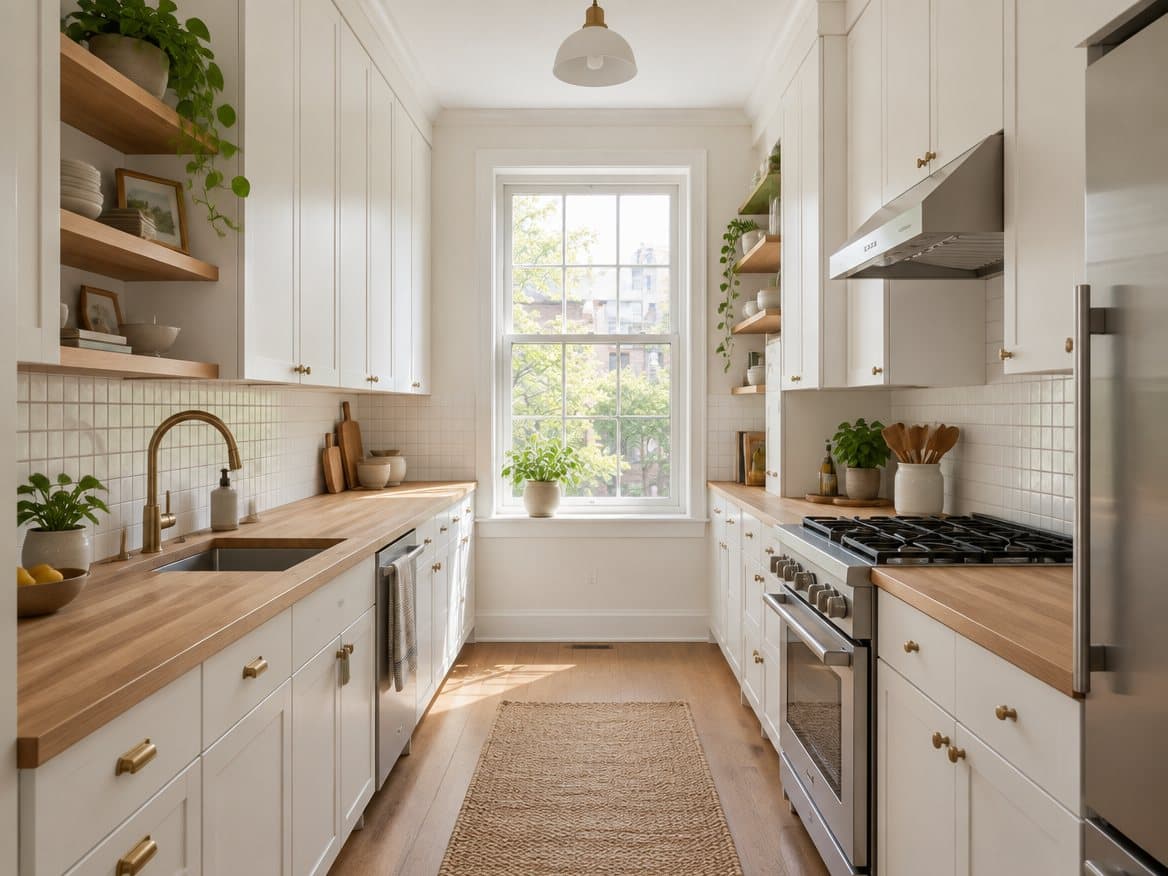
The backsplash is the smallest surface in the kitchen and the one people change their mind about most. It is also the finish that ties the cabinets and countertop together or quietly fights them. Kitchen and Bath Experts installs backsplashes in nearly every Richmond kitchen we remodel, and this is the advice we give before anyone falls in love with a tile sample.
Pick the backsplash last
Choose cabinets first, countertop second, backsplash third. The backsplash has the most options and the least cost, so it should adapt to the other two, not the reverse. Bring a cabinet door sample and a countertop sample with you when you look at tile; a tile that looks perfect alone often looks wrong beside a busy granite.
The main backsplash options
- Subway tile. 3×6 ceramic in a running bond is the classic. Today's versions include 2×8, 4×12 and 3×12 sizes, glossy or matte, with flat or beveled faces. Timeless, inexpensive, easy to clean.
- Zellige and handmade-look tile. Glazed clay with uneven edges and variation in color. Adds warmth and character, popular in the Fan and Museum District renovations. Grout lines are irregular by design; choose a grout close to the tile color.
- Large-format porcelain. 12×24 or larger tiles with minimal grout. Clean, modern, easy to maintain. Needs a flat wall and careful layout so cuts land in corners.
- Full-height slab backsplash. The same quartz or stone as the countertop, run up the wall to the cabinets or the hood. No grout at all, dramatic behind a range, and the easiest surface to clean. The most expensive option per square foot.
- Mosaic tile. Small-format glass, stone or ceramic on mesh sheets. Herringbone, hexagon, penny round, and picket shapes. Best used as an accent behind the range rather than the whole kitchen.
- Natural stone. Marble, travertine or slate tile. Beautiful and porous; needs sealing and tolerates less grease and acid than porcelain.
Patterns that work
- Running bond (offset). The default for subway tile. Works in any kitchen.
- Stacked (straight set). Vertical or horizontal stacks of rectangular tile. Modern and calm; popular with slab-front and flat-panel cabinets.
- Herringbone. Adds movement; best in a single-color tile so the pattern reads without visual noise.
- Vertical stack. Draws the eye up; makes 8-foot ceilings feel taller in older Richmond homes.
- Picket and hexagon. Distinct shapes that stand on their own; keep the color simple.
How high to run it
The standard is counter to the bottom of the upper cabinets, about 18 inches. Running tile to the ceiling behind open shelving or the range hood is one of the most requested upgrades in our Richmond projects and makes the kitchen feel custom. Where there are no upper cabinets, decide on a stopping point that lines up with something: the top of a window, the bottom of a hood, or the ceiling.
Grout: the choice nobody plans for
- Matching grout makes the pattern disappear and the material read as one surface
- Contrasting grout (dark on white tile) highlights the pattern and shows every imperfection in the layout
- Use epoxy or high-performance grout behind the range; it resists grease and never needs sealing
- Grout lines in a kitchen should be as thin as the tile allows, typically 1/16 to 1/8 inch
Mistakes we fix most often
- Too many patterns. A busy granite, a patterned tile and a two-tone cabinet together is three things competing. Let one surface be the star.
- Stopping the tile short. Ending at the last upper cabinet and leaving painted wall to the window reads unfinished. Wrap the tile to a logical end.
- Forgetting the outlets. Outlets and switches should be planned so they land in full tiles or at grout lines, and covers should match the tile tone. Horizontal outlets under the cabinets are cleaner.
- Choosing from a 4-inch sample. Always see a full sheet or several tiles laid out together; handmade-look tile especially varies piece to piece.
- Installing before the countertop. The backsplash goes in after the counters are set so it sits on the finished surface. Cabinets, then counters, then backsplash.
Frequently asked questions
What backsplash goes with white cabinets and quartz counters? Nearly anything, which is both the advantage and the problem. A warm zellige, a soft-gray large format, or the same quartz as a slab are three safe directions with different personalities.
Should the backsplash match the countertop? It should agree with it. A slab backsplash matches exactly; a tile backsplash should pick up one tone from the counter.
How much does a backsplash cost? It depends almost entirely on the material and pattern. As a planning figure, a subway tile backsplash is a small line item in a Richmond kitchen remodel; a full-height slab is several times that. Kitchen and Bath Experts prices it inside the single fixed proposal.
See the samples together
We bring cabinet doors, countertop samples and tile to your kitchen so you can see them in your light. Book a free in-home consultation or visit our showroom [Client to confirm].